Under DAP (Delivered at Place), the buyer clears customs and pays import duties. Under DDP (Delivered Duty Paid), the seller does both. The tradeoff is straightforward: DAP gives the buyer more control and exposes them to clearance delays, while DDP hands the buyer a simpler experience but requires the seller to absorb customs risk. In some countries, DDP is not even legally possible unless the seller has a resident importer of record on the ground.
TL;DR:
- DDP requires the seller to handle import clearance, pay duties, and act as the importer of record, which may be impossible in countries without local registration or permits.
- DAP places import duties and taxes on the buyer and often involves the buyer handling import clearance and unloading risks unless explicitly specified otherwise.
- Accurate contract wording and pre-shipment verification of delivery place, HTS codes, and customs arrangements are critical to prevent disputes under either term.
- DDP quotes typically include duties in the total price, but it’s safer to request itemized duty costs to avoid hidden risks from tariff changes or currency fluctuations.
- Petroleum shipments should be carefully assessed for local import capability because non-compliance with jurisdictional or licensing requirements can cause delays, detention, or returned cargo.
Table of Contents
- DAP vs DDP Incoterms: A Side-by-Side Comparison
- Seller and Buyer Obligations Under Incoterms 2020
- How Duties Show Up in DAP vs DDP Pricing
- Why DDP Can Fail: Jurisdictional and Operational Red Flags
- How to Choose Between DAP and DDP
- Pre-Shipment Checklist for DAP or DDP
- What This Means for Petroleum Procurement Teams
- How Blastoff O Farming Consulting Supports Incoterm Readiness
- Sources
- FAQ
DAP vs DDP Incoterms: A Side-by-Side Comparison
Both terms fall under the Incoterms® 2020 rules published by the International Chamber of Commerce, and both put the seller on the hook for export clearance, international carriage, and delivering goods ready for unloading at a named destination. Where they split is import clearance, duty payment, and who carries the financial exposure once the shipment reaches the buyer's country, according to ICC Academy's guidance on DAP and DDP.
- Export clearance and international carriage: seller's responsibility under both terms.
- Delivery to named place, ready for unloading: seller's responsibility under both terms.
- Import clearance: buyer under DAP; seller under DDP.
- Import duties and taxes: buyer under DAP; seller under DDP.
- Unloading at destination: typically the buyer's cost and risk under both DAP and DDP, unless the contract specifies otherwise.
DAP tends to show up in B2B container shipments where the buyer already runs an import operation and wants to control classification and duty scheduling. DDP shows up more often in B2C parcel shipping, where an ecommerce buyer simply wants a delivered price with nothing to sort out at the border, a pattern Inbound Logistics highlights in its comparison of the two terms.
Seller and Buyer Obligations Under Incoterms 2020
The rulebook is precise about who does what, and contract language should mirror it exactly rather than paraphrase it.
- Seller duties common to both terms: arrange and pay for carriage, complete export clearance, bear transport risk, and deliver the goods to the named place ready for unloading.
- DAP buyer duties: handle import clearance, pay import duties and taxes, and typically bear the cost and risk of unloading unless the sales contract states otherwise.
- DDP seller duties: complete import clearance, pay import duties and taxes, and notify the buyer once goods are delivered. This requires the seller to either act as importer of record or work through a local agent who can.
- Unloading clarity: neither DAP nor DDP automatically makes the seller responsible for unloading. That obligation belongs to DPU (Delivered at Place Unloaded), the third Group D term, which is often confused with DAP but shifts unloading risk to the seller.
Sellers who assume DDP means "handle everything" without confirming their import capability are the most common source of Group D disputes.
How Duties Show Up in DAP vs DDP Pricing
A DDP quote bundles duty into a single delivered price, which looks cleaner but can obscure risk. A DAP quote separates transport from duty, which looks more complex but keeps the cost breakdown visible to the buyer. The two totals can land close to identical once broker fees, storage, and duty variance are factored in, according to TariffWise's comparison of DDP and DAP for importers.
- Under DDP, the seller absorbs the risk if tariff classification changes or duty rates shift between quoting and clearance.
- Under DAP, the buyer keeps that exposure but also keeps control over free trade zone options, bonded warehousing, and duty scheduling.
- Currency movement between quote and clearance date can widen or shrink the seller's margin on a DDP deal without either party noticing until the invoice lands.
Pro Tip: Never accept a flat "DDP" quote without a duty line item. Ask the seller to quote "DDP excluding taxes" or itemize estimated duty separately, especially on shipments where tariff classification is uncertain.
Why DDP Can Fail: Jurisdictional and Operational Red Flags
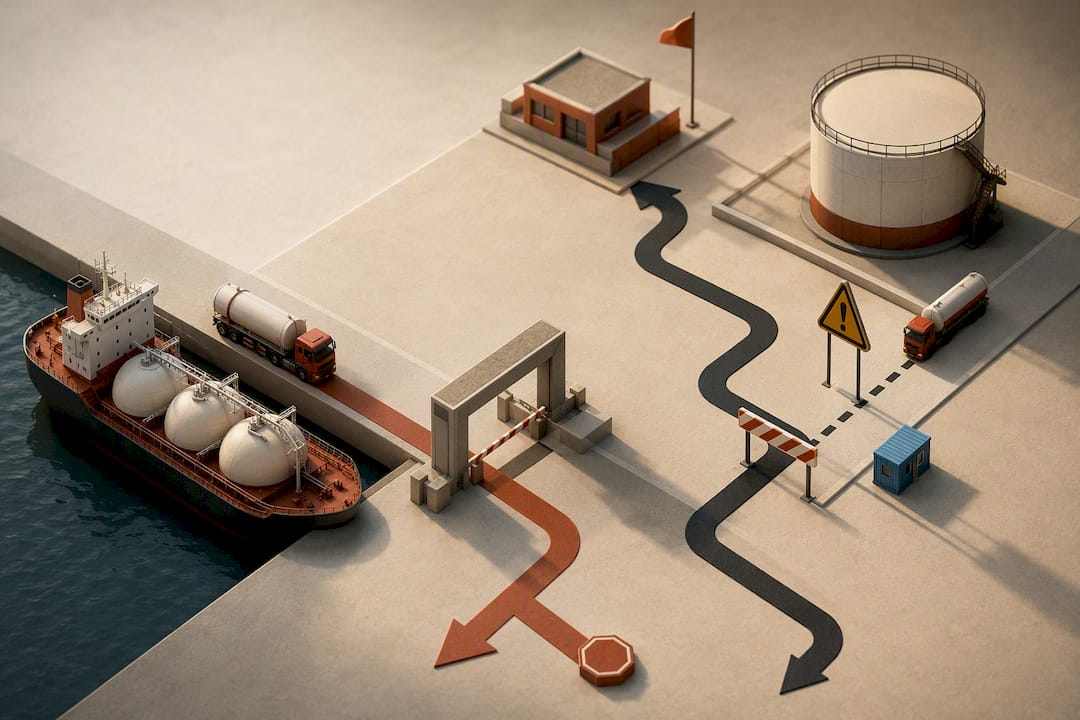
Some countries require a resident importer of record to complete customs clearance, which makes DDP legally impossible for a foreign seller without a local entity or agent, per ICC Academy. This single fact derails more DDP commitments than any pricing dispute.
Watch for these before agreeing to DDP:
- No local tax registration or importer-of-record arrangement in the destination country.
- A vaguely defined named place instead of a dock-level address.
- Missing HTS/HS codes, permits, or licenses for the specific commodity.
- No power of attorney arranged for a customs broker to act on the seller's behalf.
Get any of these wrong and the cargo can sit in detention, accrue storage and demurrage charges, or get returned to origin at the seller's expense.
How to Choose Between DAP and DDP
The decision comes down to who can actually perform import clearance, not who would prefer to avoid the paperwork.
- Assess the buyer's import capability. A buyer with an established customs broker and import license is a strong candidate for DAP.
- Weigh shipment frequency and value. High-value, recurring shipments often justify the operational overhead of DDP if the seller has verified local capability.
- Match to B2C or B2B context. Ecommerce and retail buyers generally expect DDP-style simplicity; industrial buyers often prefer DAP control.
- Check commodity-specific controls. Regulated goods, including petroleum products, may require permits that only a licensed local importer can hold.
- Confirm seller's importer-of-record status before quoting DDP. If unverified, default to DAP or DPU.
Pro Tip: Document the Incoterm decision in the sales contract along with who appoints the customs broker. A verbal agreement on "we'll handle customs" is not a substitute for a named importer of record.
Pre-Shipment Checklist for DAP or DDP
Confirm the named delivery place down to the street address and dock number, since a vague location invites disputes over final-mile costs. Verify the consignee's contact details, the correct HTS codes, and any permits or local tax registrations required for the goods.
- Agree in writing who appoints and pays the customs broker.
- Confirm who provides power of attorney for clearance.
- Set a clear payment path for duties, storage, and demurrage before the shipment loads.
- Establish an escalation contact on both sides for customs queries or delays.
The Trade reinforces this same point: precise contract wording and pre-shipment verification prevent most Group D disputes before they start.
What This Means for Petroleum Procurement Teams
Petroleum shipments raise the stakes on Incoterm choice. Permits, excise regimes, bonded movement rules, and fuel classification decisions can change duty treatment entirely, and a seller without a verified importer-of-record arrangement should not be committing to DDP on a fuel cargo. We recommend a documentation review and readiness assessment before any DAP or DDP term gets written into a petroleum sales contract. Teams weighing this decision are welcome to consult Blastoffofarming for a pre-shipment verification pass.
— Blastoff
How Blastoff O Farming Consulting Supports Incoterm Readiness
Getting DAP or DDP wrong on a petroleum shipment costs more than a delayed pallet. It can mean a detained cargo, a denied import, or a duty bill nobody budgeted for. Blastoffofarming works specifically with petroleum buyers, suppliers, refineries, and importers to catch these gaps before they reach the negotiating table, through documentation review, importer-of-record verification, and vendor registration strategy tailored to the petroleum sector.

For a single-shipment documentation check or a pre-shipment readiness review, the Starter Consultation fixed-fee package is built for exactly that scope. Buyers managing recurring cross-border volume often need the deeper support in the Professional Consultation, while large or strategically complex petroleum transactions fit the Executive Consultation package. Visit Blastoffofarming or reach out directly to discuss a qualified opportunity and get your commercial readiness reviewed before you commit to a term you can't operationally support.
Sources
- Incoterms® 2020: DAP or DDP? | ICC Academy
- DDP vs DAP: Key Differences for 2026 US Importers | TariffWise
- Trade
- DDP vs. DAP: Definitions, Differences, and Key Considerations | Inbound Logistics
FAQ
Is DAP Better Than DDP?
Neither term is universally better; each fits different capabilities. DAP suits buyers with established import operations who want duty control, while DDP suits buyers who want a delivered price with no customs involvement, provided the seller can legally act as importer.
Who Pays for Shipping on DAP?
The seller pays for and arranges international carriage under DAP, delivering the goods to the named place ready for unloading. The buyer then takes over for import clearance, duties, and typically unloading costs.
Is FedEx DAP or DDP?
Carriers like FedEx can execute shipments under either term depending on what the shipper selects at booking; the carrier itself does not fix the Incoterm. The shipper's commercial agreement with the buyer determines whether the shipment moves as DAP or DDP.
Who Pays Tariffs With DDP Shipping?
The seller pays import tariffs, duties, and taxes under DDP, then bundles that cost into the delivered price charged to the buyer. This is why itemized duty line items matter when comparing a DDP quote against a DAP quote, as TariffWise notes in its import cost breakdowns.
Can Blastoffofarming Help Verify Whether DDP Is Feasible for a Petroleum Shipment?
Yes. Blastoffofarming reviews documentation, vendor registration status, and importer-of-record arrangements for petroleum buyers and sellers considering a DDP commitment. Pricing for consulting packages is listed on the Blastoffofarming store.